Friday, May 27, 2016

Fun Fact About Joseph Haydn

Franz Joseph Haydn was a prolific and influential Austrian composer (1732-1809).
Franz Joseph Haydn began his musical study at age 8, when he was hired to sing in the choir at St. Stephen's Cathedral in Vienna. He learned to play violin and keyboard while working at the Cathedral. After he left the choir, he supported himself by teaching and playing violin, while continuing studying to play the instruments.
Haydn soon became an assistant to composer Nicola Porpora in exchange for lessons, and in 1761 he was named Kapellmeister, or "court musician," at the palace of the influential and wealthy Esterházy family, a position that would financially support him for nearly 30 years. Isolated at the remote palace from other composers and musical trends, he was, as he wrote it, "forced to become original."
Haydn wrote 106 symphonies throughout his life, but the birth of the "Farewell Symphony" had a tale with the twist, as it was told by Haydn in old age to his biographers. 
Haydn and the court orchestra had been residing and performing at the Prince Fun Fact about Joseph Haydn Firewell Sympony Nikolaus Esterházy's favorite summer palace in rural Hungary longer than expected, and musicians wished to return to their families. However, the Prince planned many future parties for the musicians to entertain. Desiring to return home, the musicians appealed to Haydn for help. The diplomatic Haydn put his request into the music of the "Farewell Symphony". During the final movement each musician stops playing, snuffs out the candle on his book stand, and leaves in turn, so that at the end, there are just two violinists left.
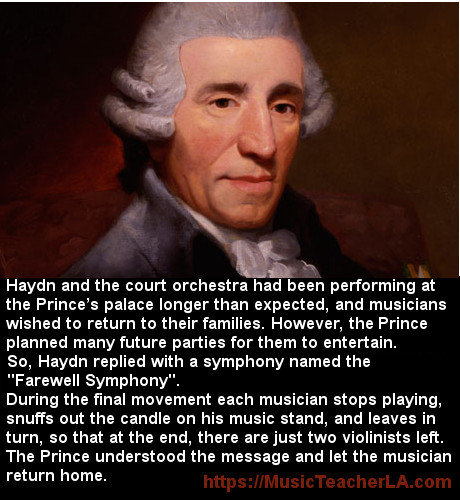
The Prince understood the message and let the musicians return home.

Monday, May 9, 2016

Mother's Day History | Song about Mommy


Mother’s Day History dates back to the era of ancient Greeks and Romans.
Ancient Greeks celebrated a spring festival dedicated to to maternal goddesses Rhea, wife of Cronus and the mother of many deities of Greek mythology. Ancient Romans celebrated a spring festival dedicated to Cybele, a mother goddess. The ceremonies honoring Cybele began around 250 years B.C. The celebration lasted for three days and included parades, games and masquerades.
During the 17th century, Christians living on the British isles initiated a celebration of motherhood, called Mothering Sunday, which was held on the forth Sunday during of Lent. This holiday featured the reunification of mothers and their children, separated when working class families had to send off their young children to be employed as house servants. On Mothering Sunday, the child servants were allowed to return home for the day to visit with their parents.
Custom of celebrating Mothering Sunday died out almost completely by the 19th century. However, after World War II, the Mother’s Day History has continued in the US.
In 1858, Anna Reeves Jarvis was the first woman to hold an official celebration of mothers, when in her home state of West Virginia, she instituted Mothers’ Work Day to raise awareness about local sanitation issues.
In 1872, Julia Ward Howe, author of the “Battle Hymn of the Republic,” suggested and promoted a Mother’s Day for Peace, to be held on June 2, which was celebrated the following year by women in 18 cities across America. Her idea spread but was later replaced by the Mother’s Day holiday now celebrated in May.
In 1905, Anna Reeves Jarvis passed away and her daughter, Anna Jarvis, who is recognized as the Founder of Mother’s Day in the US, continued her mother’s work. Anna swore on her mother’s gravesite that she would realize her lifelong dream of creating a national day to honor mothers. In 1907, Anna launched her campaign by handing out white carnations to congregants at her mother’s church in Grafton, West Virginia. In 1908, her mother’s church acquiesced to Anna’s request to hold a special Sunday service in honor of mothers – a tradition that spread the very next year to churches in 46 states. In 1909, Anna left her job and dedicated herself to a full-time letter-writing campaign, imploring politicians, clergymen and civic leaders to institute a national day for mothers. The hard work paid off. By 1911, Mother’s Day was celebrated in almost every state in the Union, and on May 8, 1914 President Woodrow Wilson signed a Joint Resolution designating the second Sunday in May as Mother’s Day.
Today Mothers Day is celebrated in many countries including the US, UK, India, Denmark, Finland, Italy, Turkey, Australia, Mexico, Canada, China, Japan and Belgium. People take the day as an opportunity to pay tribute to their mothers and thank them for all their love and support.Traditionally, flowers, cards, candies and others gifts are given to mothers on the Mother’s Day. Florists, card manufacturers and gift sellers significantly profit from the sales proceeds on the Mother’s day.

Looking for the quality private Singing Lessons in Los Angeles?

Contact our dedicated and experienced Vocal Coaches today at (310) 220-0405, or visit https://MusicTeacherLA.com/los-angeles-voice-lessons/


Share our story with friends and family. Thank you!

Tuesday, May 3, 2016

361st Birthday of the Piano Inventor

361st Birthday of the Piano Inventor B. Christofori

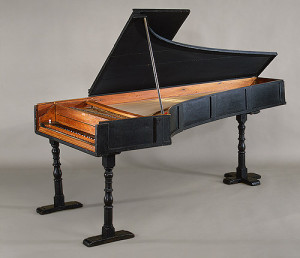
Bartolomeo Cristofori di Francesco, best known as the piano inventor, was born on May 4th, 1655 in Italy. Bartolomeo Christofori, the piano inventor
Hired by Ferdinando de Medici, the Prince of Tuscany, Bartolomeo maintained the royal collection of musical instruments.
The most popular instrument of his days was a harpsichord.

Cristofori innovated the hammer mechanism inside the harpsichord that struck the strings but did not remain in contact with them (which damps the sound, as is the case with the harpsichord and clavichord), and the hammer returned to its rest position immediately, and is therefore able to be sent to strike the string again very quickly, in rapid succession, allowing for much faster play than the other keyboard string instruments.
Additionally, the invented instrument piano was able to respond to the strength Los Angeles Piano Lessonsof the player's key press, allowing for some notes to be played louder or quieter than others, which , something that the earlier instruments could not do. That is why the original piano was named pianoforte, which means "quiet-loud" in Italian.
Today, there are only 3 original pianos built by Christofori left.

In addition to being the piano inventor, Bartolomeo Christofori created two other keyboard instruments: the spinettone and the oval spinet.


Looking for a highly qualified and friendly Los Angeles Piano Teacher? Experience the difference of learning from the top piano instructors!

Call today at (310) 220-0405 to schedule your initial lesson, or learn more about our private Los Angeles Piano Lessons.


Monday, May 2, 2016

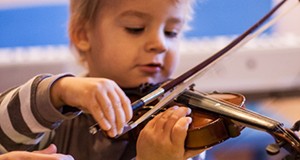
8 Fun Violin Practice Games for Kids

Violin is not an easy instrument to learn, especially 
Violin lessons for children
for a young child. This is partly because your child won’t be actually playing music right away and  would need to practice the pre-violin skills first, such as holding the bow correctly and producing the right sound playing a single note. All the pre-violin skills might feel boring for your preschooler who wants to play his or her first song.

How can you encourage your child to practice repetition and keep it fun?

1. Keep the practicing sessions short, or up to 5 minutes long.
2.  Try the following 8 ideas to make the practice time fun and motivating:
Silly Cards. Make silly cards showing different physical activities, such as sticking out tongue, standing on one foot, closing eyes, opening mouth wide, closing one eye, wiggling bottom, doing fishy month, playing pizzicato, making rabbit face, singing the piece, etc.
Have your child draw a new silly card for each repetition. For example, if your child plays the Twinkle song and draws “sticking out the tongue,” he or she should play twinkle with tongue out the whole time.
For a silly bonus repetition ask your child to try to do all of the things at the same time.
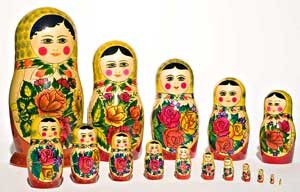
Matryoshka. This Russian doll comes in handy
Violin practice game for kids
 in teaching to practice repetition. Every time the child plays a repetition, open one doll. When he or she gets to the second last doll, have a treat in it, instead of the tiny doll.


Violin Tour. Take your youngster “on tour”, playing an exercise one time in each room of the house, on the balcony, outdoors, etc.
Drinking cups. Place small cups turned upside down on the table and hide a treat in one of them. Let your student lift one of the cups for each successful repetition.
Toy audience. Let your child play one of the Twinkle rhythms for each of his or her favorite stuffed animals. Each of the animals would “thank” your child after the performance and “ask” to play the Twinkle-Variation again and again.
Abacus. Flick a bead for each repetition until the child plays it 10 times. It’s so simple and the kids love it.
Simon Says. In this popular game, you can take turns with your child to be “Simon”. For example, when you play A on the violin, your child should sit down, stand up when you play E, jump up when you play F#, etc. Then, your child plays a note and you do the correct movements.
Prevent the Fall. Place a small stuffed animal on the violin hold, just to the left of the G string. Ask your child to play the homework exercise 5 times avoiding dropping the animal.

Olesya MacNeil has been teaching children since 1991 and striving to make every music lesson educational and fun!

Searching for a highly professional, creative and fun Los Angeles Violin Teacher?

Call today at (310) 220-0405 to schedule your initial lesson, or learn more about our Los Angeles Violin Lessons.

Wednesday, February 24, 2016

Ten Ways to Encourage Creativity

10 Ways to Encourage Creativity in Children

As parents, many of us constantly search for new ways to inspire and encourage our children’s curiosity, creativity, and interest in the world around them, and help them grow up successful, innovative and productive members of our society.

Ways to boost creativity:

  1. Role Playing. “Mom, can you play with me?”Creative ChildrenHow often do we hear those words? And what kind of games do our kids want to play most? The most exciting and creative play is a role playing- making up new games, songs and stories, coming up with outfits, characters’ voices, taking turns, drawing new ideas, etc. Such games can go on for hours and even days, bonding us with our children tighter and creating a more satisfying relationship.
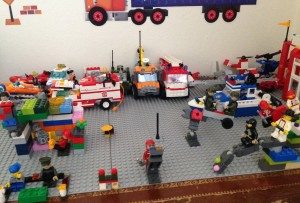
  2. Building Things. I didn’t have Legos as a child, but I recall building Child plays with legomany working cars (school buses, taxis, dump trucks) using a cartoon, round cups for wheels, pencils, and a toy motor. When I went to the 1st grade, I signed up to the class of the young technician and was fascinated with ways to produce elementary electricity. To date, and being a mom, I can fix minor electrical problems around the house and enjoy doing it.
  3. Telling Stories. All kids love telling stories. Writing those stories down, drawing scenes and characters, and publishing them online on the kid-friendly websites, make the projects fun, memorable and gift-appropriate.
  4. Sharing Photos. A number of internet-based image publishing companies help create the original projects about your recent trip, school event, or a holiday with ease and then even share and collaborate with friends and family.
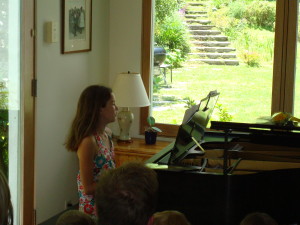
  5. Learning to play an instrument. Growing up in the musically-inclined family of the engineers, Child plays pianoI began taking piano and voice lessons at age 5. Even though I did not like practicing scales as a young child, I vividly remember exciting daily activities with my childhood friend, during which we composed musical duets on the piano and then played them for our parents in four hands!
  6. Taking singing lessons. Running a music teaching business, I often tell parents how fun voice lessons are! Personally, I have never met a child who would not like singing. Having taking voice lessons and participating in a choir as a child, and then conducting a children’s choir as an adult, I have seen children transform during the lessons, forgetting the thoughts of daily troubles and diving into the world of music, beauty and dreams.
  7. Staging a Theatrical Show. When I was growing up, my parents’ friends’
    Kids music performanceand our families were Toddler theatrical performance in Los Angelesmeeting weekly for cheerful sport, art or simple fun activities. One of those gatherings was the theatrical shows, which we were staging in someone’s living room and recording on the video. We created names for our shows, plots, actors, roles, and ridiculous and hilarious outfits. The shows were frequently interrupted by our laughter during each performance, and then there were even more laughter during video viewing times.
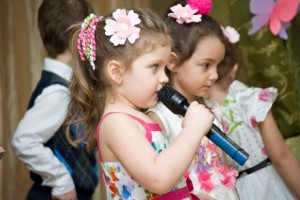
  8. Performing in a Music Show. Singing together,Music show making up songs and performing as a group is an incredible, relaxing and enjoyable activity for a whole family.
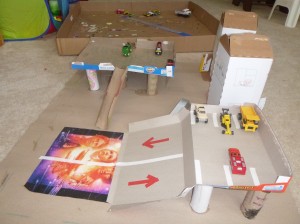
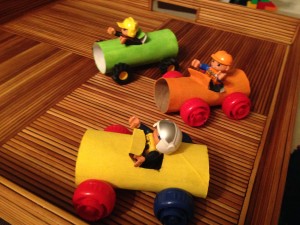
  9. Making Art. I love a local Costco wholesale store. Besides the items I enjoy buying there, this is the place where I pick up the very large cartoon papers art project- garage, train station, parking Art project with children- making carsand being thanked by the personnel for recycling them. Those huge cartoon papers along with the paints (from oil to water-based), brushes, stickers, cut-out stamps made of potatoes, bell peppers, and such unable my kids and I create roads, cities, holiday arts, music instruments (see some of our projects here: Music DIY for Kids) and great mood any time!
  10. Learning a new language. I feel joy watching many local children switching with ease between two or more languages. Being a bilingual parent, I learned two new languages as an adult and benefited from it not only by enjoying the process of learning and improving my memory, but also by freely using them in different companies, at work, and by reading some of the world literature in the original language.
About the author: Olesya MacNeil is the founder and CEO of Music Teacher LA – Los Angeles and South Bay’s provider of quality private Music Lessons for Ages 4-up and Piano Tuning Services.

Wednesday, February 17, 2016

What is the best age to start Piano Lessons for your child?

Best age to start piano lessons
Parents who enroll their children in music lessons early on inevitable provide a powerful boost for their youngsters’ overall development. A number of studies suggest that formal music lessons increase children’s brain growth and neurological processes. Early music education helps develop hand-eye coordination, improves language skills, teaches to use both left and right side of the brain simultaneously, develops discipline, patience and music appreciation, and instills confidence. Additionally, studies show that adults who played music instruments in their childhood processes the sound better, which in turn helps them to keep their hearing sharp in old age.
Piano is the best and easy first instrument to learn
1.     The child just needs to press the key to produce a sound
2.     The concept of positioning both hands on the keys is easily understood
3.     Kids who start taking piano lessons at age 4-5 naturally curve their fingers
4.     A comprehensive knowledge acquired in piano lessons can later be applied to any other instrument.

 So, what is the best age to begin taking piano lessons?

 My personal experience teaching private piano lessons since 1991, backed by the results of research both here and abroad, shows that children greatly benefit from starting formal piano training as early as age 4, when brain circuits for learning music mature. However, since every child is individual in his abilities and development, it is important to evaluate their emotional, mental and physical readiness before engaging them in piano lessons. Your parental readiness and support are also essential.

 Emotional Readiness

Los Angeles piano lessons
I long have noticed that it is easier to teach a 4-year old student to play the piano when he shows an interest in learning an instrument from the start. Those students concentrate on learning the material and look forward to studying a new song. Focus is an important part of learning process, as well as the ability to listen to the teacher and follow directions. The student who does not want to learn the piano, but gets enrolled into the lessons by his convinced parents will perform poorly, despite the entertaining and engaging music material and fun music games offered by the skilled piano teacher during lessons.

 Mental Readiness

To begin formal piano lessons, a student needs to have a basic understanding of the counting. Young children learn to number their fingers, 1 through 5 and position the correct finger number on the keys. Additionally, the kids learn to count music beats and rhythm.
Music is made up of notes and each note has a letter name. The young music students need to understand the alphabet concepts and know at least the letters of the music alphabet, A through G.


 Physical Readiness

Students should have a basic motor and hand-eye skills to coordinate the note reading with the key pressing.
Additionally, students will need to be able to move each finger independently in order to translate the note reading to the finger movements.

Parental Readiness

Parental support and willingness to help children develop a daily practice routine will help them to progress faster, take lessons more seriously, and stay motivated.

Music education at an early age is very important in children’s overall development. All of our music instructors are experienced working with very young children and keeping the lessons fun and engaging.


Olesya MacNeil has been a private piano teacher since 1991 and is the founder of Music Teacher LA, a provider of in-home and in-studio Music Lessons on all instruments for ages 4-adult and Piano Tuning services in L.A. and the South Bay. Learn more about their piano programs at http://MusicTeacherLA.com/Los-Angeles-Piano-Lessons/ or call (310) 220-0405.

Tuesday, August 25, 2015

Music Teacher LA BLOG - Enriching articles, educational gems, upcoming events in Los Angeles, and more.

Dear readers,


Dive into our Blog for enriching articles, educational gems, upcoming events, plus the freshest deals and promos. Your hub for all things musical at Music Teacher LA.   https://MusicTeacherLA.com/Blog

Read find articles such as:
- How to Raise a Musical Child

- When to Tune Your Piano

- 7 Things Every Parent Should Know About Music Lessons

- 5 Proven Ways to Motivate Your Child to Learn

- 6 Music Practice Tips

- Best Healthy Breakfast for Kids

...and more.


Share and Follow! Thank you.


Olesya MacNeil | President

Music Teacher LA | Established in 1991, Los Angeles' Leading Provider of Quality In-home Piano 🎹 Guitar🎸 Violin🎻 Drums🥁, and Singing🎤 Music Lessons for Children (Ages 4-Up) and Adults.
Student Hotline: (310) 220-0405

Monday, March 30, 2015

Music Teacher LA Newsletter- April 2015

Happy Passover and Happy Easter from MTLA!

Online registration for Summer Camp 2015 

is now open.


Dear students, parents and friends of MTLA!


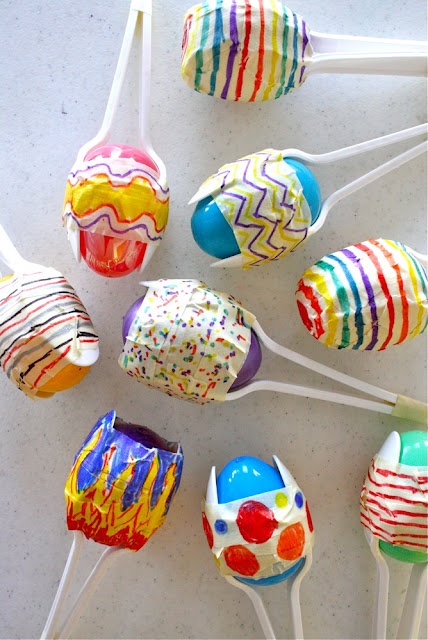
Easter craft
Egg Maracas
Passover and Easter are coming to town.


We are wishing you Happy Spring Holidays 2015!


Have you heard of the Egg Maracas? Try it now with your kids! (You will need plastic eggs, plastic spoons, dry beans, and a decorative tape).
At Music Teacher LA, we do fun music craft activities during our Summer Music Camps.


Passover Joke told by an MTLA student.
A 2-year old girl has been staying past midnight on the night of Passover.
When her grandma saw the girl still awake, she exclaimed:
- Why aren't you in bed? It's pass your bedtime.
The smart 2 year old replied:
- No, it's not pass the bedtime. It's Pass over!


Register for Summer Music Camp 2015

Music Teacher LA offers Montessori-inspired Summer Music Camp experiences in Marina del Rey for musically inclined students ages 4- 12.  Campers do not need special talents or skills, only a willingness to try. The program is a 1-10 weeks half and full day camp that commences in the middle of June and continues through the month of August.

Students living in San Fernando Valley and South Bay areas can participate in MTLA's Summer Music Camp while their parents receive a FREE parking in Marina offered during the hours of the camp, take a water ride to Fisherman's Village via Marina Water Bus ($1 each way), or enjoy local restaurants and beach.

Summer Music Camp with Music Teacher LA
​The Camp Program includes:
  • Playing and Making Instruments
  • Music Theory
  • Music History and Composers
  • Math and Music Logic Games
  • Improvisation and Beat Lab
  • Music movement
  • Singing and Dancing
  • Swimming in a Pool Once a Week
  • Water Play and Sound Exploration
  • Beach Fun Activities
  • Two Private Parks in a Secure Community
  • Music Crafts
  • Karaoke and More!
 Tuition 2015
Half day 9am-12:30pm   Daily fee: $65
Full day  9am-3pm           Daily fee: $80
A non-refundable supply fee of $15 per camper is required with registration.
Tuition Discounts
3 days per week                 $225 per week
4 days per week                 $270 per week
5 days per week                 $300 per week
Sibling Discount
Save $15 OFF for each sibling when 2 siblings enroll for 2 weeks or more, 5 days per week.
Extended Care
Reserve in advance along with camp registration. Children dropped off before 9am or picked up after 3:10pm will be charged. Before care (8-9am) and After Care (3-8pm) are available on Wednesdays and Fridays at $15 per hour.
Parking
Free parking is available during the hours of the camp for parents/guardians of the campers.
Reservations
Advance reservations required. You may register by phone at (310) 220-0405, or
by filling out the registration form at https://MusicTeacherLA.com/lessons-fees/summer-music-camp/


Wednesday, August 6, 2014

7 Things Every Parent Should Know About Music Lessons


by Olesya MacNeil

Why do children lose interest in music lessons within the first 6 months? After listening to parents tell me their stories of signing up their children with a music teacher or a music school only see their children’s loss of interest so soon, I wondered why?
In my extensive teaching and now, running my own music school, I saw only a few dropouts after 6 months of studying and two of those were due to parents’ divorce and change of address, and the third student was just not interested to begin play an instrument in the first place.
I began questioning the parents about their children’s lessons and found an astonishing difference.

Those music students who didn’t experience early drop-out were exposed to the following:

1. Teacher’s passion for teaching and creativity counts.
It becomes more and more popular all over the world to start teaching children music, math and reading young. The majority of new music students today are 3-5 year old. We must ask ourselves: how do 3, 4 and 5-year old learn? 3- and 4-year old children have expansive imagination and natural curiosity. Some children this age have pretend friends, love making silly faces, singing unintelligible songs and being funny. They learn best when they are active- dancing, moving, stomping feet, snapping fingers and clapping hands. 5-year olds have a natural desire to become independent and feel grown up. They are eager to learn at this age and their learning should be fun, inspiring and creative.
What resources do music teachers have enabling them to provide fun and interactive individual music lessons to very young children? There is not much material today to support instructors in their teaching process when working with very young kids. Teachers must encourage learning and stimulate children’s natural curiosity and enthusiasms for learning. Teachers must be creative in preparing their lessons plans and fill young children’s lessons with music-related activities that boost their imagination and creativity. Once a student falls in love with music, the child will be ready for the next, more advanced and difficult level of playing with both hands, and learning music theory and improvisation.

->> Continue Reading this article at https://MusicTeacherLA.com


#Follow us on Social Media. Thank you!